
An agent acts, it does not just answer
An assistant answers a question. An agent chains steps: it reads a request, queries a system, prepares an action and can carry it out. That is a real gain for repetitive work, but every possible action is also a possible risk.
Choose bounded tasks
Start with a task that is frequent, well described and easy to check: preparing a quote, sorting requests, reconciling payments. Avoid irreversible decisions or anything that legally commits your organization at first.
Limit what the agent can do
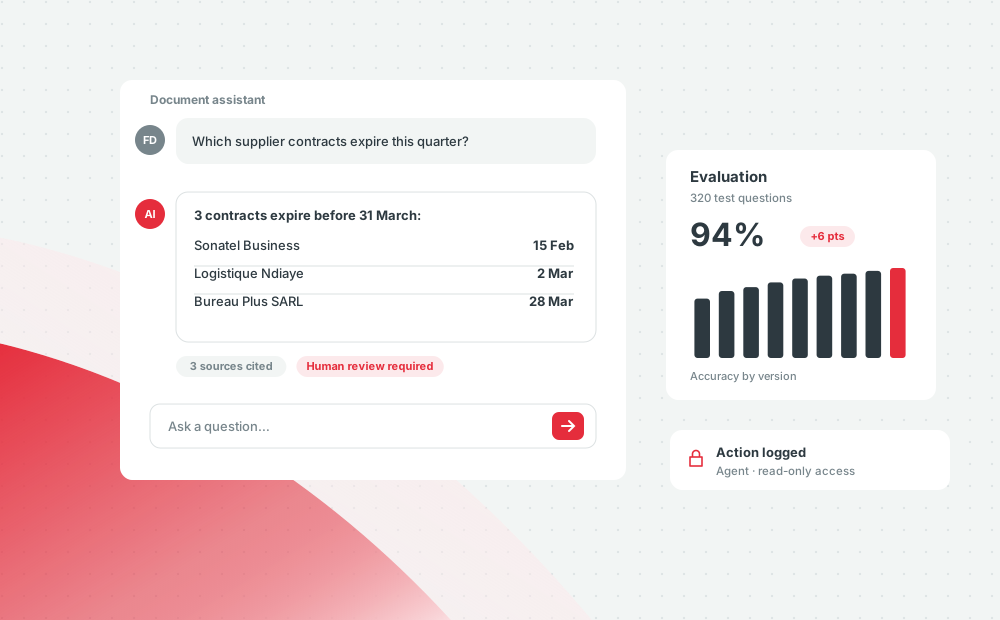
Give it minimal permissions, specific tools and caps: a maximum amount, a number of actions, a data scope. Every sensitive action goes through human review, and every step is logged.
Measure before expanding
Build a set of real cases and measure success rate, errors and time saved. Expand the scope only when results are stable. A useful agent is one your teams can audit.
Turn a perspective into a first scope.
Our discovery phase connects these questions with your usage and constraints.
Explore our approach